
What Happens to Transferred Fat After a BBL? Understanding Fat Graft Survival
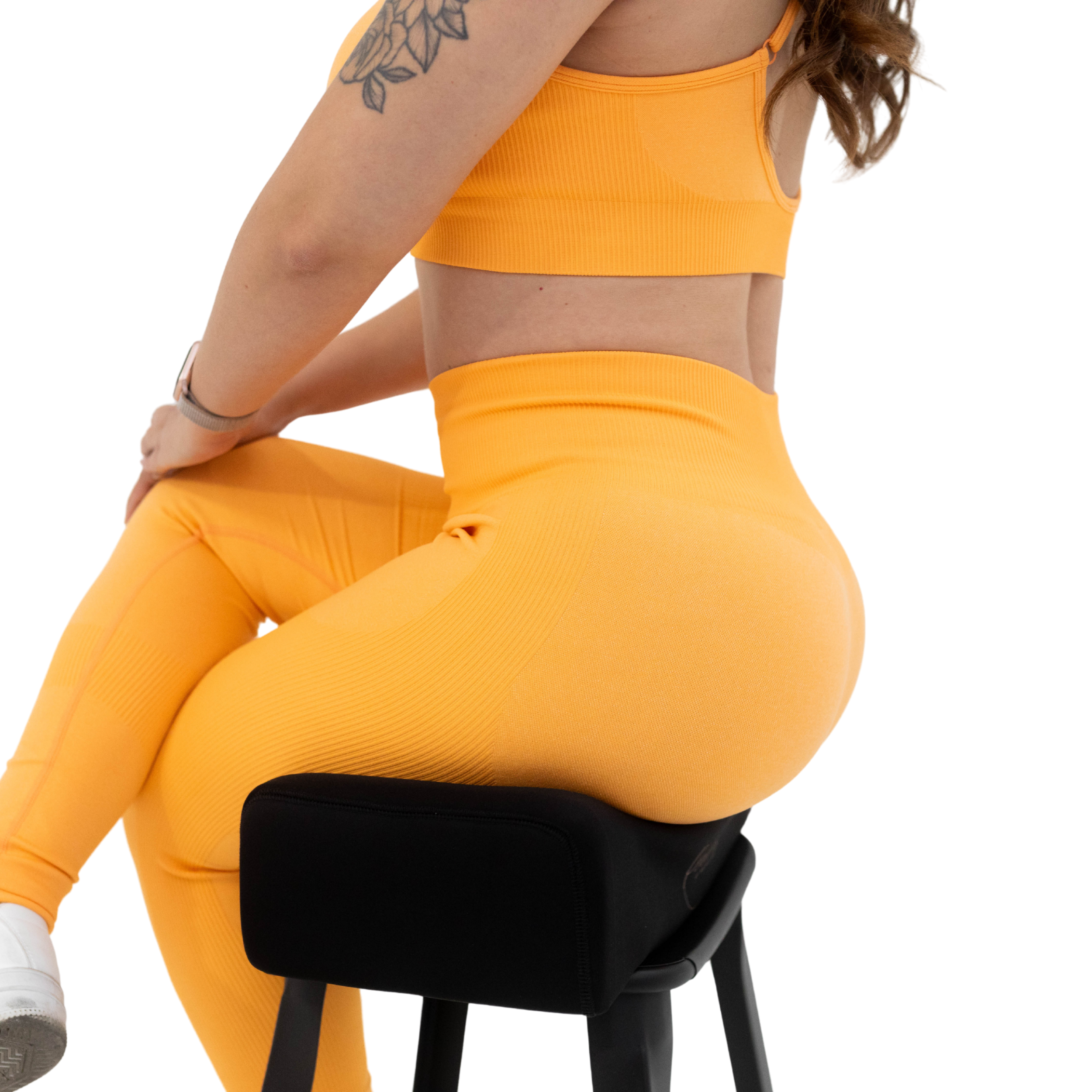
Woman sitting correctly on a BBL pillow after Brazilian Butt Lift surgery
One of the things I wish more women understood before having a BBL is that once your surgeon transfers the fat, the process isn't over.
That fat still has to survive in its new home.
During a Brazilian Butt Lift, your surgeon removes your own fat from areas such as the abdomen, waist, back or thighs and transfers it into the buttocks to create volume and shape.
But here's the part we don't talk about nearly enough:
That transferred fat doesn't immediately have an established blood supply.
Your body still has some work to do.
Your Transferred Fat Is Healing Too
When we talk about BBL recovery, we tend to focus on the things you can see and feel—swelling, bruising, compression garments, soreness and changes in your shape.
But there's also an important healing process happening beneath the surface.
The transferred fat is trying to establish itself in a completely new area of your body.
Research into autologous fat grafting—the medical term for transferring your own fat—shows that grafted fat is transferred without its own blood supply. Initially, it relies on the surrounding tissue for oxygen and nutrients while new vascular connections develop. Research published in Seminars in Plastic Surgery explains this process of fat-graft revascularization.
Some of the transferred fat will successfully become established in its new location.
Some of it won't.
And that is an expected part of fat grafting.
So How Much of Your BBL Fat Actually Survives?
You've probably heard a percentage.
Maybe someone told you that you'll keep 60%, 70% or 80% of the transferred fat.
The problem is that there isn't one percentage that applies to every patient.
A systematic review of autologous fat grafting found considerable variation in reported fat survival and also noted differences in how researchers measure fat retention. Other reviews have reached the same basic conclusion: fat-graft retention can vary considerably. Research published in the Chinese Medical Journal reviewed the variability in reported fat-graft survival.
There are simply too many variables to promise everyone the same result.
Your surgeon's technique matters. How the fat is harvested, processed and placed matters. The area receiving the fat matters. And your individual body and healing response matter.
That's why I would be very cautious about treating any percentage you see online as a guarantee of what your body is going to retain.
Your surgeon is the person who should discuss what you can realistically expect based on your procedure and their technique.
Think of It This Way
Your surgeon didn't simply move fat from Point A to Point B and call it a day.
The transferred tissue has to become part of its new environment.
Research into fat grafting shows that access to oxygen and nutrients is especially important during this early period while the graft is establishing a blood supply. Fat that doesn't receive what it needs can be resorbed rather than surviving long term. A review published in Plastic and Reconstructive Surgery – Global Open discusses the role of oxygen, vascularization and other factors in fat-graft survival.
There's a lot more science behind this process, but for someone recovering from a BBL, the important takeaway is much simpler:
Your BBL is still developing long after you leave the operating room.
That's also why what you see in the mirror during those first few weeks isn't necessarily your final result.
You have swelling. Your tissues are healing. Your body is changing. And the transferred fat itself is going through its own healing process.
Give your body time.
So, What About Sitting After a BBL?
This is usually where everyone starts paying attention.
“Am I going to ruin my BBL if I sit down?”
First and foremost, follow your surgeon's instructions.
Different surgeons have different postoperative protocols, and your instructions should be based on your procedure—not something your friend did after her BBL, something you saw on social media or even something you read here.
The American Society of Plastic Surgeons explains that patients undergoing buttock augmentation with fat grafting may be instructed to avoid prolonged sitting during early recovery. When sitting is necessary, it describes placing a pillow or cushion beneath the hamstrings to help raise the buttocks and reduce pressure on the grafted area. Read the American Society of Plastic Surgeons' buttock-enhancement recovery guidance.
And this is an important distinction:
A BBL pillow isn't supposed to make your butt more comfortable while you're sitting on it.
You're not supposed to put the pillow underneath your buttocks.
A properly positioned BBL pillow goes underneath your thighs.
By supporting and elevating the thighs, it helps change where your weight is being supported while you're seated and can help reduce direct pressure on the buttocks when your surgeon has instructed you to do so.
And This Is Exactly Why I Created The Bellini™ BBL Pillow
After working with post-surgical clients, I kept seeing the same problem.
Women were investing thousands—sometimes tens of thousands—of dollars into their procedures and then trying to figure out something as basic as:
How am I supposed to sit?
Think about how many times you sit during an ordinary day.
In the car. At the kitchen table. At your desk. At an appointment. Eventually, back at work.
And many of the BBL pillows available to my clients just weren't very good.
Some were too narrow. Some compressed too easily. Some moved around underneath the thighs. And some simply weren't comfortable enough to use consistently.
I wanted something better.
That's how The Bellini™ BBL Pillow came to be.
The Bellini is 18 inches length, 9 inches width and 5 inches high, with a firm 3 inch polyurethane support base, a 2 inch gel memory-foam comfort layer and a non-slip bottom.
Those features weren't chosen because they sounded good on a product page.
They were chosen because how a BBL pillow supports your thighs matters.
The Bellini isn't designed to go underneath your buttocks. It's designed to provide a stable platform underneath your thighs so you can modify the way you're sitting when your surgeon has instructed you to reduce direct pressure on the grafted area.
Can a BBL Pillow Help Your Transferred Fat Survive?
Here's where I want to be very clear.
A BBL pillow cannot guarantee fat survival.
There are too many biological and surgical factors involved for any pillow—or any recovery product—to promise how much transferred fat your body will ultimately retain.
The Bellini can't control your surgeon's technique.
It can't control how your individual body heals.
And it can't guarantee your final BBL result.
What it can do is help solve one very specific problem during BBL recovery:
How do I sit when my surgeon has instructed me to reduce direct pressure on my buttocks?
That's what it was designed to do.
Your Recovery Is Bigger Than Any One Product
In my work with post-operative clients, one thing becomes very clear: no two recoveries look exactly the same.
Even when two people have the same procedure, their swelling, tissue response, comfort, mobility and overall healing can look very different.
Your procedure, your surgeon's technique, your health, your tissues, your activity and your body's individual healing response all become part of your recovery.
That's why I will always tell you to follow your surgeon's instructions first.
A good recovery product should make those instructions easier to follow.
It shouldn't make promises it can't keep.
The Bottom Line
The fat transferred during a BBL isn't automatically permanent the moment your surgery is finished.
Your body still has to heal, and that transferred fat has to establish itself within its new environment. Research consistently shows that some transferred volume may be lost during this process and that long-term fat retention varies from person to person.
So give your body time.
Follow your surgeon's instructions.
Be thoughtful about how you're sitting when you've been instructed to avoid direct pressure.
And remember that recovery isn't about doing one thing perfectly. It's about giving your body the best environment you reasonably can while it does an incredible amount of work behind the scenes.
That's exactly where I believe thoughtfully designed recovery products belong.
Not instead of good post-operative care.
Written by Monica Skalsky, CMT, C-MLD, CLT, BLDM, founder of Wrthit and Peaches by Wrthit and creator of The Bellini™ BBL Pillow.
This article is for educational purposes only and isn't a substitute for medical advice. Always follow the postoperative instructions provided by your plastic surgeon.